Want to build a Thermal Energy Network?
Put it in the Plan.
TENs in Planning and Zoning
One of the best ways to ensure a Thermal Energy Network for your community is to add Thermal Energy Networks to your town’s planning and zoning documents and your regional plan.
When you integrate a clear definition and specific actions for Thermal Energy Network development into your town and regional plans, you are building a project into your future.
While many start with the energy chapter or an energy plan, don’t stop there. There are multiple sections where TENs can fit in with and support town and regional planning.
Recommended definition
To copy and paste into your town and regional plans
Thermal Energy Networks (TENs) are highly efficient heating and cooling systems that use a network of underground pipes and ground or water-source heat pumps to capture and distribute thermal energy for heating, cooling, and hot water to multiple buildings simultaneously. TENs are similar to water and sewer systems in that they serve as shared infrastructure supporting dense, mixed-use development patterns.
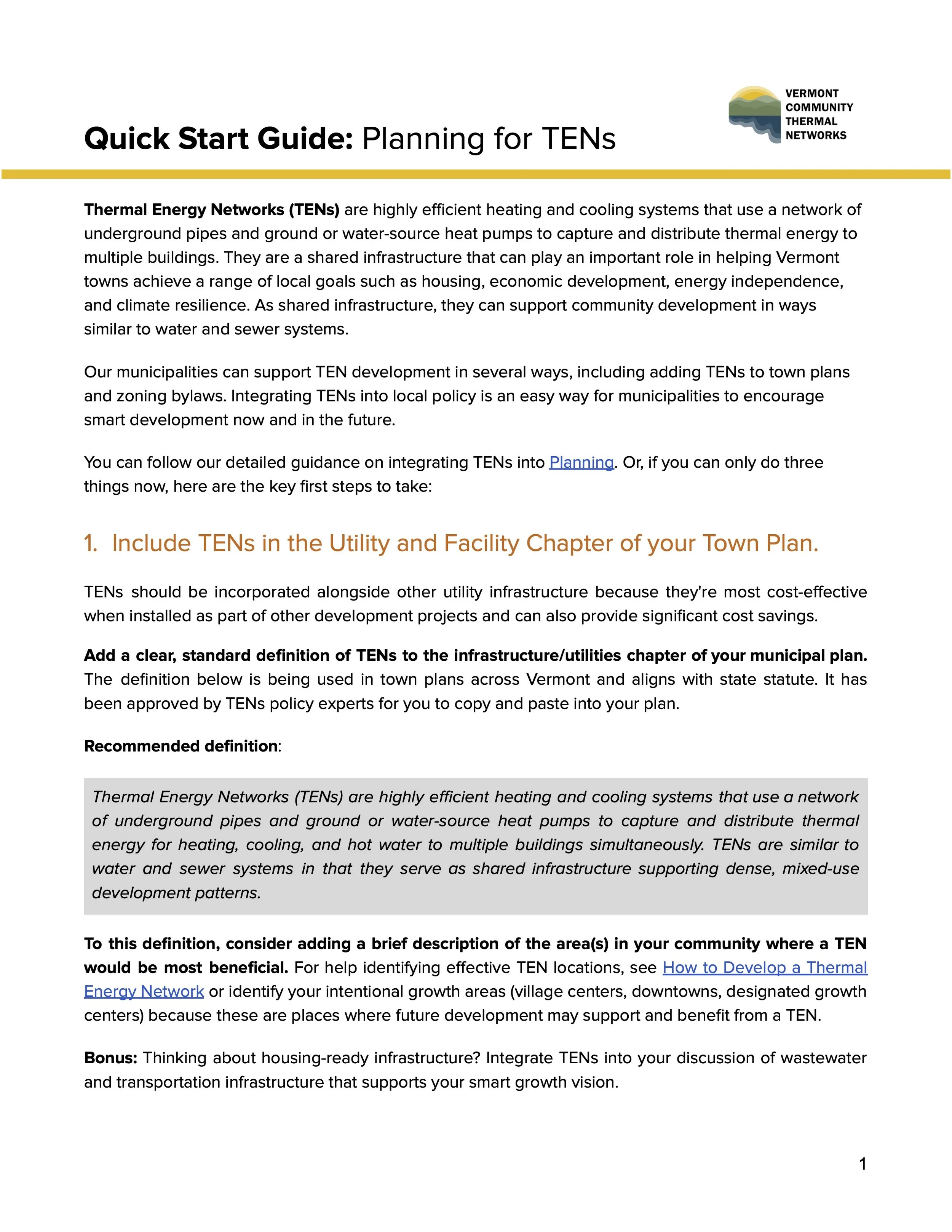
Quick Start Guide
If you can only do one thing now . . . (or two or three), start with this short guide that simplifies how to:
Include TENs in the Utility and Facility Element of your town plan.
Add the recommended definition of TENs to the infrastructure/utilities section of your municipal plan.Add a TENs action to your town plan
Include at least one goal, objective, policy, or action item about TENs that commits your municipality to taking a first step or a next step.Integrate TENs into your zoning regulations.
Ensure that your zoning bylaws include the recommended definition of TENs and classify TENs as permissible in density or growth areas.
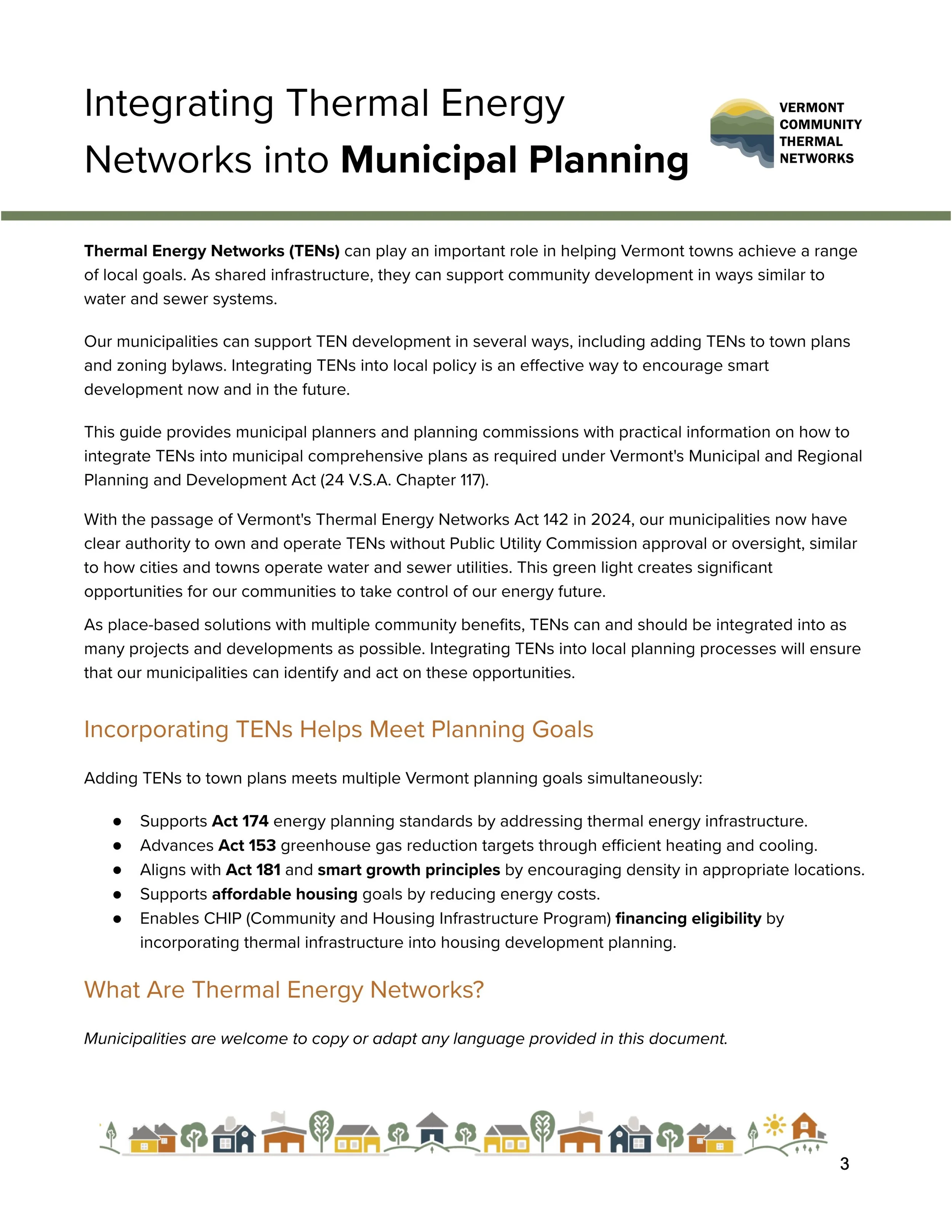
One more thing . . .
If you haven’t yet consulted How to Develop a Thermal Energy Network, please check out that toolkit full of info and action steps.
Any questions? Please be in touch with us at info@vctn.org.
TENs in Town Plans
This roadmap for integrating TENs into your town plan offers many recommended actions and example language for a number of sections:
Statement of Objectives, Policies, and Programs
Land Use
Transportation
Utilities and Facility
Educational Facilities
Energy
Housing
Economic Development
Flood Resilience